- Spirulina is a nutrient-dense type of algae rich in protein, omega-3s, B vitamins, iron, copper, and antioxidants.
- It supports heart health by lowering bad cholesterol and blood pressure and is a sustainable, eco-friendly protein source.
- Choose tested spirulina, and consult a healthcare provider if pregnant, breastfeeding, or having clotting disorders.
Spirulina, a type of blue-green algae, has been cherished as a source of protein since as far back as the 1300s when the Aztecs and other Mesoamericans regularly consumed it. And while it was once only found online or at specialty shops, it’s now available in most grocery stores and supermarkets. The allure of this popular aquatic plant comes not just from its health benefits and flavor profile, but also from its ease of use and sustainability potential.
Here’s a full guide to what’s inside the nutrient-dense superfood of the sea.
Spirulina’s Nutritional Profile
Found in brilliant green and blue varieties, spirulina is packed with vitamins, minerals, macronutrients, and plant compounds. This impressive nutrition profile is a key aspect of what sets spirulina apart as a superfood.
Protein
Spirulina is chock-full of protein, with a massive 16 grams per quarter cup. Protein is vital for healthy bones, muscles, skin, hair, nails, and nearly every other type of tissue in the body. It boosts immunity and drives the metabolic reactions necessary to improve digestion, aid in tissue repair, and prevent muscle loss. Protein is also important for maintaining brain health and healthy blood cell function.
Related
Omega-3 Fatty Acids
While vegan sources of omega-3 fatty acids can be hard to find, spirulina delivers. With a healthy helping of omega-3 and omega-6, spirulina can help you reap all the anti-inflammatory benefits of these fatty acids.
B Vitamins
Spirulina also provides a healthy dose of various B vitamins, especially thiamin, riboflavin, and niacin. These vitamins are key to maintaining a healthy metabolism.
Iron
A single tablespoon of spirulina can provide over 10% of your daily iron needs. This mineral is vital for healthy growth and development, as well as hemoglobin formation—the protein in red blood cells charged with transporting oxygen from your lungs to every corner of your body.
Copper
Copper is also readily found in spirulina. This often overlooked mineral is a key player in both immune system and nerve cell health, while also being pivotal in iron absorption.
Manganese
Another mineral found in spirulina is manganese. This mineral is very important for healthy tissue, hormone, bone, and blood formation while also playing a large role in various metabolic functions.
Pigment and Plant Compounds
One way spirulina really stands out in the health department is with its high concentration of pigment and plant compounds, including chlorophyll, carotenoids, phycocyanins, lutein, and zeaxanthin. While you may not be familiar with all of these names, the biggest takeaway is that all of these compounds are potent antioxidant and anti-inflammatory agents, helping you to fight off illness and chronic disease.
Benefits of Spirulina
As you might imagine based on its nutritional profile, this amazing plant has been linked to quite a few impressive health benefits.
Immune Health
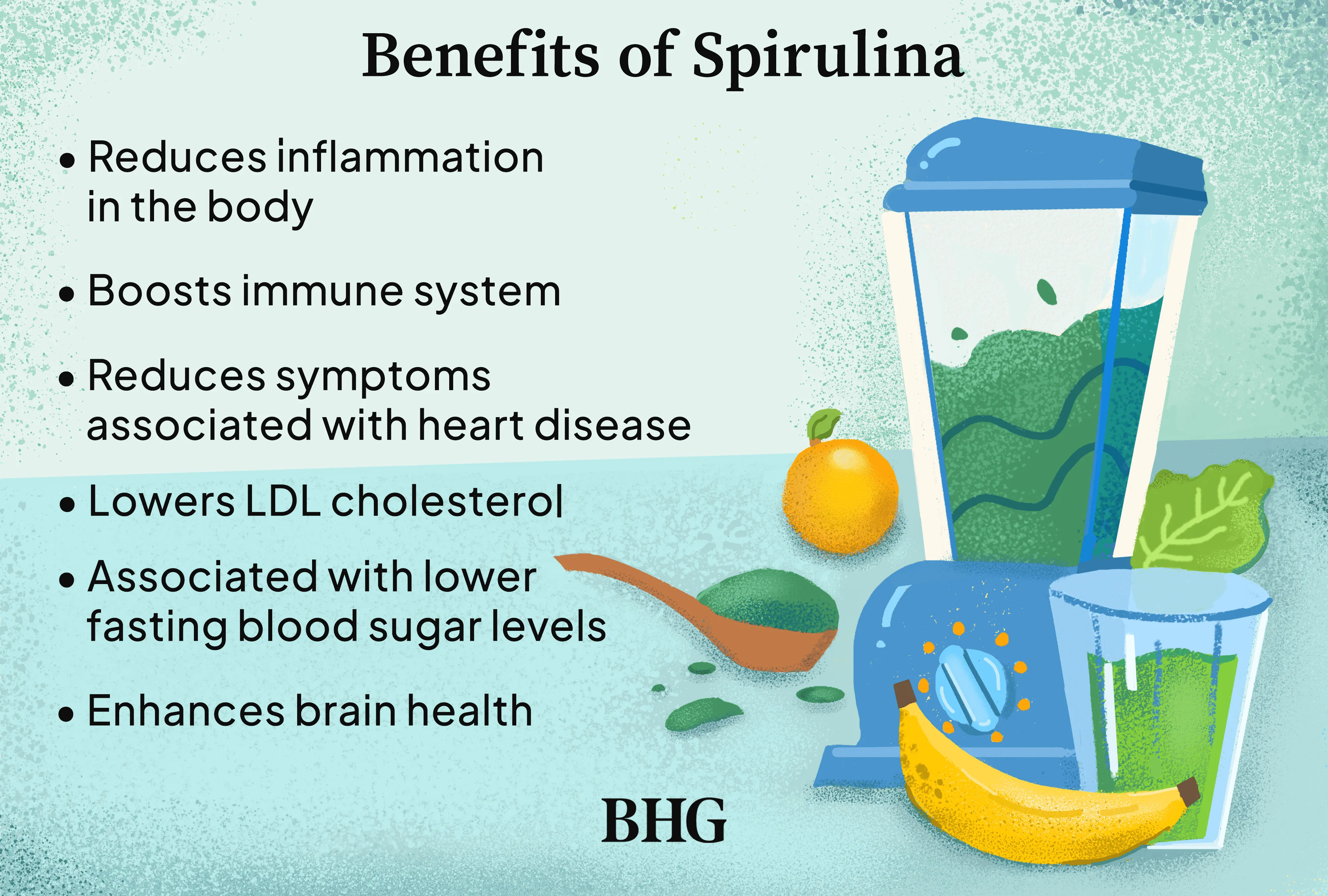
When it comes to immune health, spirulina delivers on all fronts. Due to the nutrients it contains, spirulina helps to reduce inflammation in the body, enabling the immune system to work more effectively. Its antioxidant capacity, too, helps to eradicate free radicals in the body, which are the culprits of a variety of health concerns—from minor inconveniences like wrinkles all the way to serious illnesses like cancer.
Cardiovascular Health
Spirulina has also proven effective in reducing symptoms and conditions associated with heart disease. One analysis found spirulina linked with lower overall cholesterol and triglyceride levels. Plus, the analysis discussed spirulina’s ability to reduce the harmful kind of cholesterol in the body, while increasing the beneficial kind. Another meta-analysis found that spirulina may be associated with preventing and treating high blood pressure, though more evidence is needed to prove a definitive correlation.
Sustainability
If you’re conscious of your food’s environmental impact, you’ll be thrilled to learn that spirulina is one of the most eco-friendly supplements you can add to your nutrition regimen. The sustainability powerhouse has a low carbon footprint—especially compared to other protein sources like beef and lamb. Spirulina also grows incredibly fast and can be harvested in just two to three weeks. It grows in a hydroponic setup with minimal freshwater needs. In fact, NASA scientists (who have used spirulina for decades to provide astronauts with the nutrients they need) are investigating spirulina and other microalgae for their applications in life support and biofuel systems.
Things to Know Before Using Spirulina
Before you try this superfood, there are a few more things to note.
Spirulina grown in an unregulated environment can absorb environmental toxins that could be passed on to you, so look for a brand that is third-party tested for purity standards. Spirulina can reduce blood clotting, so if you have any clotting disorders, discuss adding spirulina to your diet with your healthcare provider. It also contains phenylalanine, an amino acid that causes harm to those with phenylketonuria (PKU). Generally, if you are in a high-risk health group (including those who are pregnant or breastfeeding) or are otherwise immunocompromised, it’s a good idea to run your interest in spirulina by your healthcare provider first.
Adding Spirulina to Your Daily Diet
While there is no official spirulina intake recommendation, the generally accepted dose is somewhere between one and three grams, up to 10 grams per day. With all the amazing health benefits and nutrient density spirulina has to offer, try adding a scoop to your next smoothie as an incredible addition to your healthy lifestyle. Or, try these other easy options:
- Stir a spoonful of spirulina into fruit or vegetable juices.
- Use spirulina powder as a topping on popcorn.
- Add spirulina to a cocktail.
- Include it in your favorite granola bar, morning muffin, or healthy cookie recipe.
- Add spirulina to a salad or salad dressing.
- Swirl some spirulina into your favorite dip or guacamole.
Frequently Asked Questions
- Can I take spirulina in tablet or capsule form?
Yes. Spirulina is available in tablets and capsules at most supplement stores and health food grocers. There is no notable difference between spirulina in powder or pill form, so choose the delivery method that works best for your routine.
- How should I store spirulina powder?
Some spirulina powders and tablets require refrigeration, so check the manufacturer’s label for recommendations. Otherwise, store your spirulina powder in a tightly sealed container in a cool, dry place (like a cupboard or pantry). Avoid storing it above your stove or refrigerator as the heat from cooking or the condenser coils could damage the product. The nutritional quality of spirulina powders will degrade when exposed to moisture, light, and heat.
- Is spirulina vegan?
Yes. Spirulina is vegan, gluten-free, and keto-friendly. However, some supplements and powders may have additives that are not. Check the manufacturer’s label before adding it to your diet.
- <span>Recipes & Cooking</span>
- <span>Healthy Recipes</span>
- <span>Healthy Eating</span>
Karkos, P. D., Leong, S. C., Karkos, C. D., Sivaji, N., & Assimakopoulos, D. A.. 2011. “Spirulina in clinical practice: evidence-based human applications”. Evidence-based Complementary and Alternative Medicine Journal.
Shubrook, Nicola. “Top 5 Health Benefits of Spirulina." BBC Good Food.
Leech, Joe. "10 Health Benefits of Spirulina." Healthline.
Bortolini, Débora Gonçalves et al. “Functional properties of bioactive compounds from<em>Spirulina</em>spp.: Current status and future trends.” Food chemistry. Molecular sciences vol. 5 100134. 19 Sep. 2022, doi:10.1016/j.fochms.2022.100134
Lobo, V et al. “Free radicals, antioxidants and functional foods: Impact on human health.” Pharmacognosy reviews vol. 4,8 (2010): 118-26. doi:10.4103/0973-7847.70902
Serban, Maria-Corina et al. “A systematic review and meta-analysis of the impact of Spirulina supplementation on plasma lipid concentrations.” Clinical nutrition (Edinburgh, Scotland) vol. 35,4 (2016): 842-51. doi:10.1016/j.clnu.2015.09.007
Machowiec, Piotr et al. “Effect of<em>Spirulina</em>Supplementation on Systolic and Diastolic Blood Pressure: Systematic Review and Meta-Analysis of Randomized Controlled Trials.” Nutrients vol. 13,9 3054. 31 Aug. 2021, doi:10.3390/nu13093054
“Growing Spirulina.” Science Learning Lab.
Fisher, K., Saban, K., Broddrick, J., Settles, M.A. May 7, 2024. “Space algae-2 ground and lunar analog studies in preparation for long-duration propagation of cyanobacteria in spaceflight”. 53rd International Conference on Environmental Systems (ICES), Louisville, KY, United States.
"Spirulina."Mount Sinai.
Shoemaker, SaVanna. "What Are the Side Effects and Dangers of Spirulina?"Healthline.