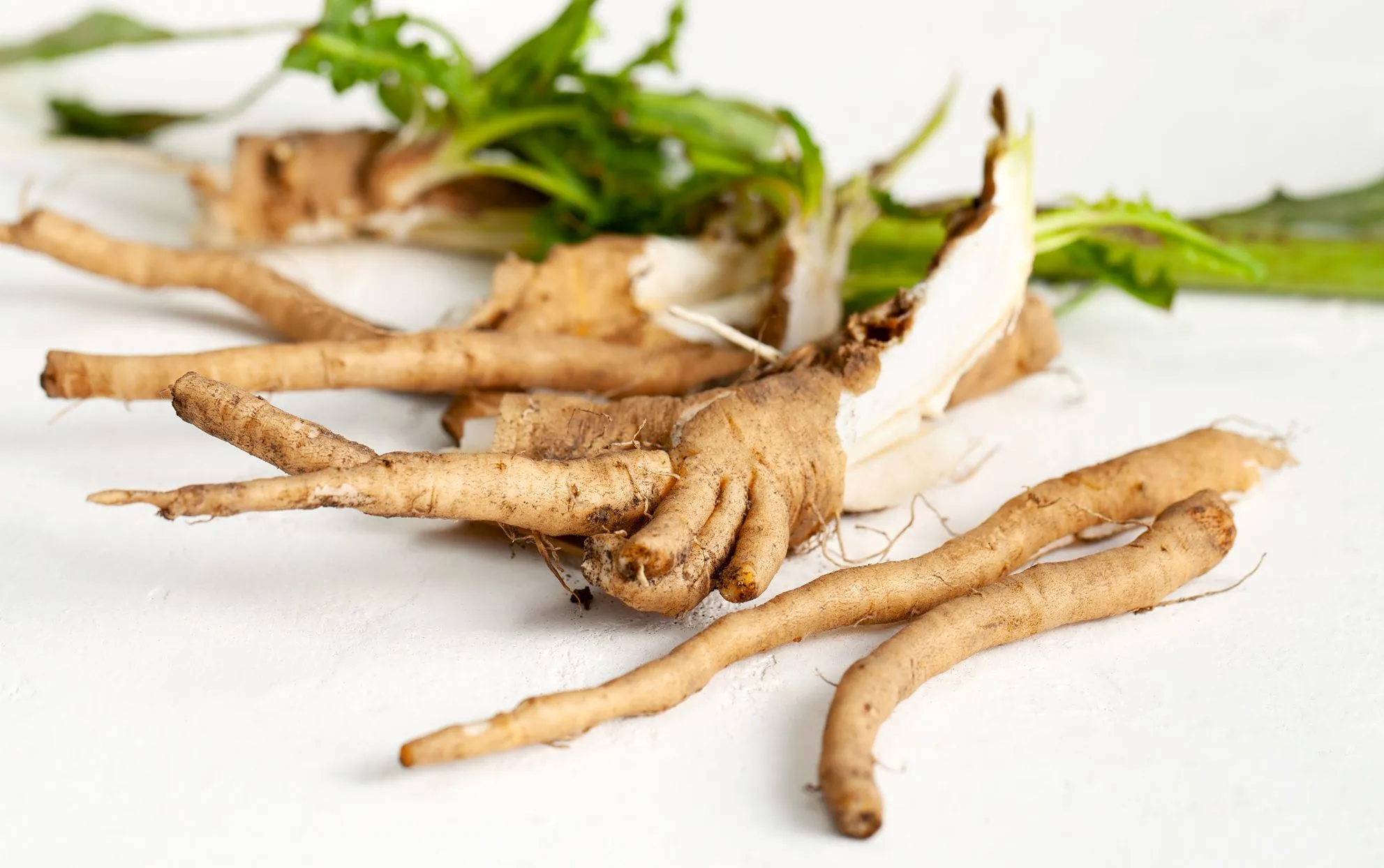
Growing up in a family with ties to New Orleans, it was common for us to serve coffee blended with chicory. After all, Cafe du Monde has served its version of café au lait (chicory coffee with milk) for more than 161 years. But what is chicory, and why is it a buzzy health food?
Chicory is the root of a blue-flowering perennial plant in the dandelion family. Some varieties produce leafy lettuces (aka chicories) such as radicchio, escarole, or frisée that we commonly eat in spring mix salads. Historically, the industry around the chicory root began in Europe in the early 19th century when it was used as an extender to make coffee last longer. Around the Civil War, shipments of coffee to the United States were low due to Union naval blockades cutting off the port of New Orleans, and chicory worked in a pinch. Today, chicory root is found in coffee blends like French Market Coffee, and in powder, capsule, and increasingly popular granule forms to brew like you would regular coffee.
The root has many health benefits, which is one reason people are adding it to their diets in various ways today. Another reason for the chicory root boom: It's naturally caffeine-free, but when it's roasted and brewed it tastes a lot like coffee, so you can get the flavor without the buzz.
Anti-Inflammatory Properties of Chicory
Our body's natural immune response to inflammation helps us recover from infections, wounds, or tissue damage, but too much inflammation (or chronic inflammation) can be a risk factor for developing various conditions, including heart disease, diabetes, and rheumatoid arthritis. Non-steroidal anti-inflammatory drugs (think ibuprofen and acetaminophen) are common treatments to alleviate pain caused by inflammation. Many foods are naturally anti-inflammatory and, when you work them into your diet regularly, can have an impact, too. Chicoric acid (CA), which is found in chicory, has been shown to have anti-inflammatory benefits and may also help regulate blood sugar levels, according to data published in the Journal of Agriculture and Food Chemistry. The polyphenols, flavonoids, sterols, tannins, and other phytochemicals found in chicory root are also believed to help promote anti-inflammatory activity. "Including chicory root in one's diet is a simple way to sneak in some anti-inflammatory benefits," says Lauren Manaker, RDN, owner of Nutrition Now Counseling.
Chicory Aids Digestion
You've probably heard your doctor/grandma/parent tell you to "eat more fiber." And they're right. Consuming enough fiber (the Academy of Nutrition and Dietetics recommends 14 grams for every 1,000 calories daily) keeps you feeling full, promotes a healthy weight, helps lower cholesterol, and can also help reduce your risk of type 2 diabetes. Fiber also plays a key role in helping prevent constipation and other gastrointestinal problems. There are two types of fiber—soluble and insoluble, both of which are key to digestion and helping prevent disease. Chicory root contains soluble fiber, which is the fiber that dissolves in water and helps slow digestion so you feel satisfied for longer. Soluble fiber is also particularly beneficial in lowering cholesterol and helping keep blood sugar levels regulated.
Chicory Is Good for Your Gut
Chicory root contains a type of prebiotic fiber called inulin. Packaged foods that are labeled "high fiber," "low fat," and "gluten-free" likely have inulin listed as an ingredient. Inulin is extracted from chicory root with hot water and used to add fiber to foods and add elasticity to gluten-free foods. So there's a chance you've been consuming chicory root without even knowing it.
"Chicory provides some vitamins and minerals, and also provides a prebiotic called inulin," Manaker says. Prebiotics help us by essentially "feeding" the beneficial bacteria (probiotics) in our guts, Manaker explains. Because probiotics are important to good gut health, encouraging their growth with prebiotics, like inulin, helps keep your gut healthy, too.
Chicory as a Coffee Alternative
Rather than buying your New Orleans coffee with chicory (though still a favorable classic), you can buy a pound of roasted chicory granules to brew; the roasted and ground chicory root resembles coffee and is naturally sweet and slightly nutty, so it's a tasty substitute for a cup of java. "I love chicory coffee as an alternative to caffeinated beverages for someone wanting to enjoy a warm, coffee-like beverage in the morning," Manaker says.
To make your own cup of chicory joe, simply add the roasted granules to your coffee maker or French Press. A mix of coffee grounds and chicory granules is a nice half-caffeinated option. You can also buy powdered chicory to make a latte by simmering with milk on the stovetop.